Love Problem Solution Specialist Astrologer: Find Your Way Back to Love
Oct 28, 2025
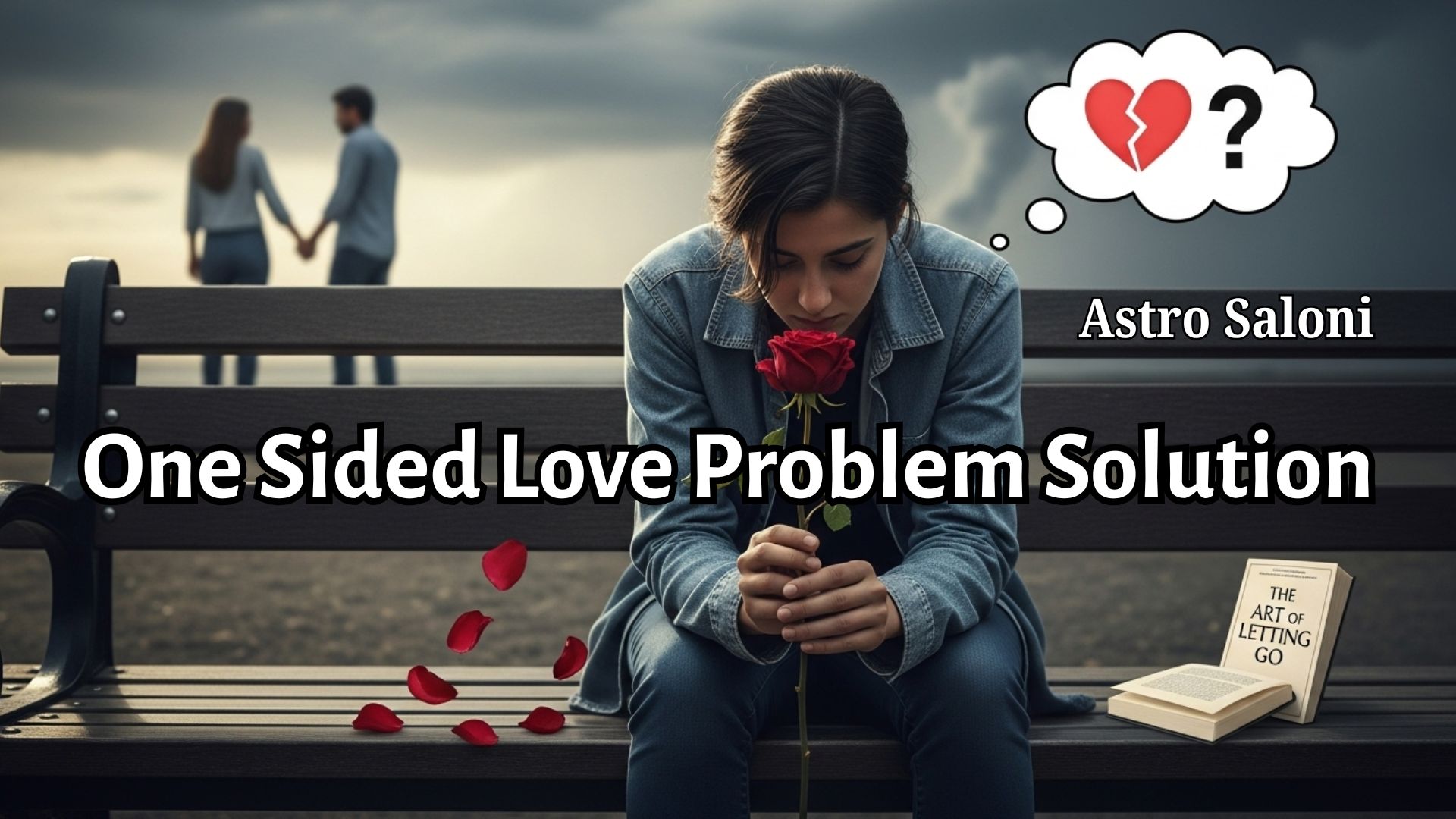
One-sided love can feel like carrying a weight that nobody else can see. You wake up thinking about them, spend your day hoping for a message, and fall asleep replaying conversations that might mean nothing to them but everything to you. It's exhausting, isolating, and often leaves you questioning your own worth.
If you're experiencing unrequited love, you're far from alone. Psychologists estimate that most people will experience one-sided feelings at some point in their lives. While the pain is real, understanding why it happens and learning healthy ways to move forward can help you reclaim your emotional well-being.
This article explores the psychology behind one-sided love, common patterns that keep people trapped in these situations, and practical steps you can take to heal and open yourself up to healthier relationships.
One-sided love occurs when you feel romantic attraction towards someone who doesn't reciprocate those feelings. You might spend months or even years hoping they'll eventually see you differently, interpreting every kind gesture as a sign of hidden feelings.
The emotional toll can be significant. You're dealing with constant rejection, even if it's never explicitly stated. The uncertainty keeps you in a state of perpetual hope and disappointment. Your self-esteem takes a hit as you wonder what's wrong with you or why you're not "good enough" for them.
Beyond the emotional distress, one-sided love can interfere with other aspects of your life. Students struggle to concentrate on their studies. Professionals find their work performance suffering. The mental preoccupation leaves little room for personal growth, friendships, or pursuing genuine romantic opportunities.
Understanding the underlying causes can help you break free from repetitive patterns. Here are five common reasons people find themselves caught in unrequited love:
You're Projecting Qualities They Don't Actually Possess
When we feel emotionally starved or lonely, we sometimes create an idealised version of someone rather than seeing them as they truly are. You might focus on a few attractive qualities whilst ignoring red flags or incompatibilities. This fantasy version becomes more appealing than the real person, making it difficult to accept that they're simply not right for you.
You're Too Focused on Winning Them Over
People caught in one-sided love often spend all their energy devising strategies to make the other person fall for them. You might change your appearance, pretend to share their interests, or constantly make yourself available. In this process, you forget to ask a crucial question: do they actually meet your needs?
Real relationships require mutual interest and effort. If you're doing all the work, you're not building a partnership—you're auditioning for a role that may not exist.
You're Using Love as a Solution to Other Problems
Sometimes one-sided love becomes a distraction from areas where our life feels lacking. Perhaps you're unhappy with your career, struggling with friendships, or feeling unfulfilled. The fantasy of this person becomes an escape, and you convince yourself that having them would magically fix everything else.
The truth is that another person cannot fill voids in your own life. Sustainable happiness comes from building a fulfilling existence independent of romantic relationships.
You're Not Confident Enough to Express Interest Early
Some people repeatedly fall for friends because they're too afraid to express romantic interest from the beginning. You hide your true feelings, hoping that proximity and time will somehow make them develop feelings for you. Instead, you become firmly established in the "friend zone" whilst watching them date other people.
This pattern often stems from fear of rejection. The irony is that by never expressing your feelings clearly, you guarantee the outcome you're trying to avoid—just more slowly and painfully.
You Can't Accept Rejection
Low self-esteem can make it incredibly difficult to accept when someone isn't interested in you. Rather than taking the rejection as information about compatibility, you interpret it as a personal failing. This leads to persistent pursuit long after it's clear the feelings aren't mutual.
Learning to accept that not everyone will be attracted to you—and that this says nothing about your value as a person—is essential for emotional health.
Acknowledging that you're in a one-sided situation is the first step. Here's how to begin healing:
Accept the Reality
You cannot force someone to love you, no matter how much you might want to. True connection requires mutual feelings that develop naturally. Accepting this reality, whilst painful, frees you to invest your emotional energy elsewhere.
Shift Your Focus Inward
Instead of obsessing over someone who doesn't return your feelings, redirect that energy towards yourself. What hobbies have you neglected? What personal goals have you put on hold? Building a richer, more fulfilling life makes you less dependent on another person for happiness.
Create Distance
Continuing to spend time with someone you have unrequited feelings for often prolongs the pain. Whilst you don't necessarily need to end the friendship entirely, creating some emotional and physical distance can help you gain perspective and begin healing.
Challenge Your Thinking Patterns
Pay attention to the stories you tell yourself about this person and the situation. Are you catastrophising ("I'll never find anyone else")? Are you idealising them beyond reason? Recognising these thought patterns helps you see the situation more clearly.
Invest in People Who Invest in You
Start noticing and appreciating the people in your life who genuinely care about you and want to spend time with you. Whether friends, family, or potential romantic interests, nurture relationships that feel balanced and mutual.
Consider Professional Support
If you find yourself repeatedly falling into one-sided love or struggling to move on, speaking with a therapist can help. They can help you identify underlying patterns, build healthier relationship skills, and work through any self-esteem issues contributing to the cycle.
As you heal, it's helpful to understand what healthy romantic interest looks like. In balanced situations:
If these elements are missing, you're likely investing in someone who isn't right for you.
Sometimes the kindest thing you can do for yourself is to walk away entirely. Consider ending contact if:
Walking away doesn't mean you've failed. It means you're choosing your own wellbeing and making space for a relationship that could actually flourish.
Once you've begun healing, you'll find yourself with more emotional availability for relationships that have genuine potential. This doesn't mean rushing into dating, but rather being open to meeting new people without comparing everyone to your previous fixation.
Pay attention to people who show clear interest in you. Notice when conversations feel easy and natural. Observe when someone makes a consistent effort to spend time with you. These are the building blocks of mutual attraction.
Perhaps the most important lesson from unrequited love is this: one person's inability to see your value doesn't diminish it. You are worthy of love, respect, and genuine partnership. The fact that a particular person doesn't reciprocate your feelings simply means you're not compatible—nothing more, nothing less.
Healing from one-sided love takes time. You'll have setbacks where you miss them or wonder "what if." That's normal. Be patient with yourself whilst consistently taking steps towards emotional freedom.
The pain you're feeling now, whilst intense, is temporary. On the other side of this experience lies the possibility of relationships built on genuine mutual affection—and that's worth moving towards.
Also Read: The Power of 7 Traditional Vashikaran Totkas for Love & Life